Banning highlight
Pass area community
The San Gorgonio Pass is home to one of the most productive wind energy communities in North America, with nearly 667 turbines generating 656 megawatts of power.
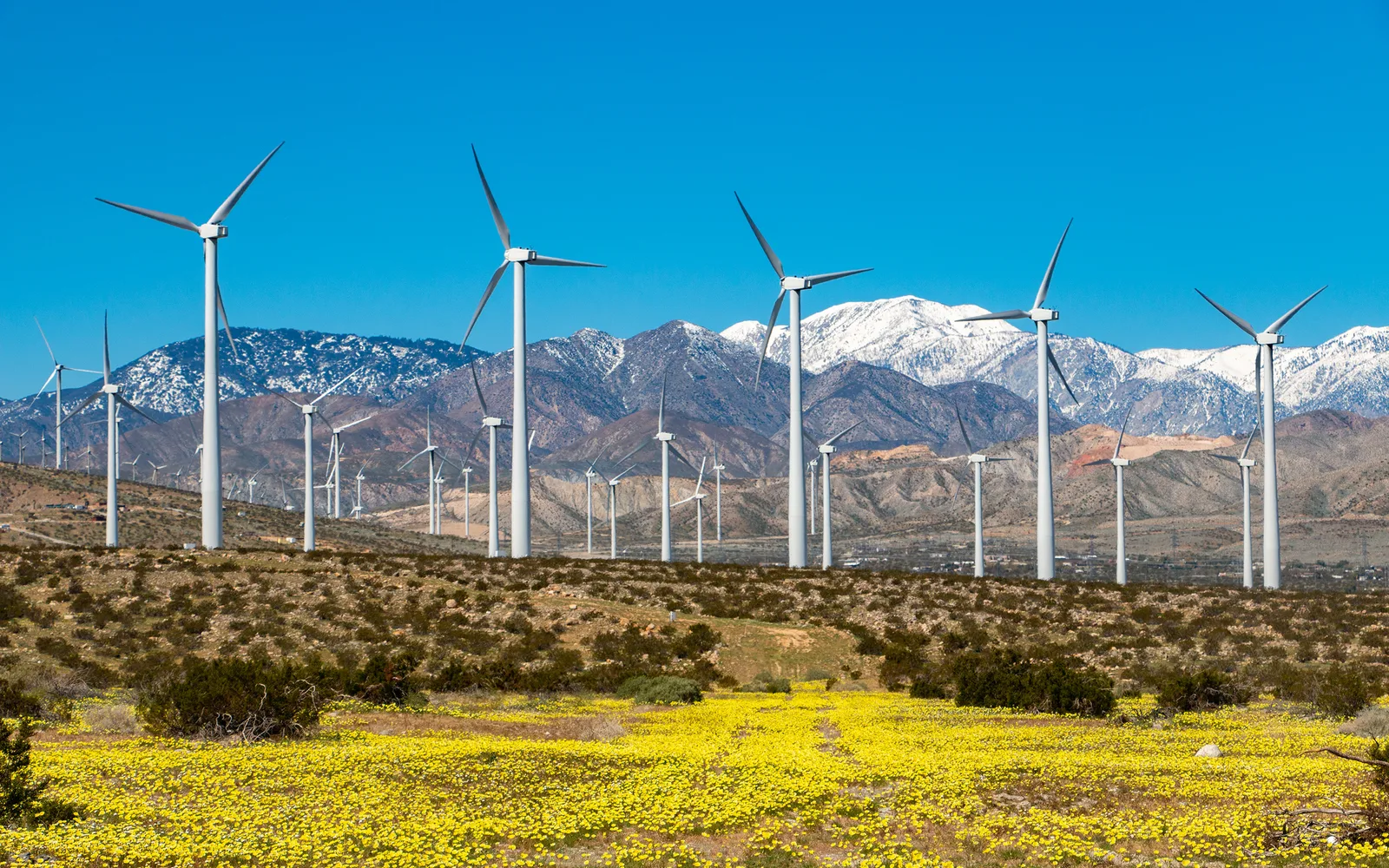
The San Gorgonio Pass, located between the San Bernardino Mountains to the north and the San Jacinto Mountains to the south, has become one of the first three major wind farm regions in California since the 1980s. Modern wind development began with an experimental generator built by Dew Oliver in 1926, but the industrial-scale era started in the 1980s when developers recognized the pass as one of the most consistently windy places in the United States. Today the facility operates 667 wind turbines with a total capacity of 656 megawatts across 27 separate projects.
The pass's exceptional windiness stems from its geography. At an elevation of 2,600 feet, the gap between the mountains creates a transitional climate zone: Mediterranean conditions west of the pass give way to desert climate to the east, and the steep terrain funnels winds through a narrow corridor. The wind farm communities have evolved accordingly, with infrastructure for renewable energy development and the skilled trades that maintain and operate the equipment. In recent years, from 2020 through 2024, extensive repowering efforts have replaced hundreds of aging turbines with fewer, more efficient modern units, and the Desert Peak Energy Facility, a battery storage system, came online in 2023.
Communities built around long-term infrastructure — whether energy, agriculture or transportation — tend to attract households that value stability and planning. The pass-area families who live alongside this renewable energy sector understand that reliable income and forward-thinking investments matter. A term life policy sized to your income and the years your family depends on it is part of that same practical approach to security.